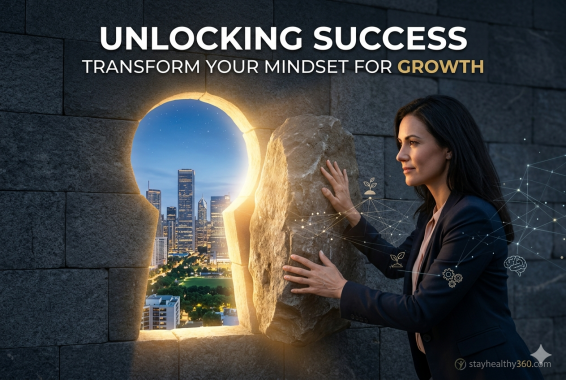
Transform your mindset for growth and unlock true success. Embrace change, cultivate resilience, and watch your potential blossom like never before.
Understanding the Power of Mindset
The human mind is a powerful tool, capable of shaping our perceptions, decisions, and ultimately, our lives. The way we think about ourselves and our abilities can significantly impact our success and happiness. This concept, known as mindset, is a fundamental aspect of personal development. A mindset is a set of beliefs or a way of thinking that determines one’s behavior, outlook, and mental attitude. It is the lens through which we interpret our experiences and make sense of the world around us.
A positive mindset can open doors to opportunities, foster creativity, and enhance well-being. Conversely, a negative mindset can limit our potential, stifle growth, and lead to a life of unfulfilled aspirations. Understanding the power of mindset is the first step towards harnessing it to achieve greater success. It involves recognizing that our thoughts and beliefs are not fixed and can be changed with conscious effort and practice.
By transforming our mindset, we can break free from self-imposed limitations and unlock our true potential. Whether it’s in our personal lives, careers, or relationships, a growth-oriented mindset can help us navigate challenges, seize opportunities, and achieve our goals. The journey towards a growth mindset begins with understanding the different types of mindsets and how they influence our lives.
The Difference Between Fixed and Growth Mindset
The concept of fixed and growth mindsets was introduced by psychologist Carol Dweck in her groundbreaking research on motivation and achievement. According to Dweck, individuals with a fixed mindset believe that their abilities, intelligence, and talents are innate and unchangeable. They view challenges as threats and tend to avoid risks, fearing failure and criticism. This mindset can lead to a fear of trying new things, a reluctance to put in effort, and a tendency to give up easily.
On the other hand, individuals with a growth mindset believe that their abilities can be developed through effort, learning, and persistence. They embrace challenges as opportunities for growth, are resilient in the face of setbacks, and view failure as a stepping stone to success. This mindset fosters a love for learning, a willingness to take risks, and a drive to achieve one’s full potential.
The difference between fixed and growth mindsets can have a profound impact on various aspects of life, from academic and career success to personal relationships and overall well-being. By shifting from a fixed to a growth mindset, we can cultivate a more positive and proactive approach to life’s challenges, leading to greater fulfillment and achievement.
The Science Behind Mindset Transformation
The transformation from a fixed to a growth mindset is not just a matter of willpower; it involves complex neurological and psychological processes. Neuroscience research has shown that the brain is highly adaptable and capable of forming new neural connections throughout life. This phenomenon, known as neuroplasticity, underlies the ability to change our thoughts, behaviors, and habits.
When we adopt a growth mindset, we engage in activities that stimulate brain growth and development. For example, learning new skills, practicing mindfulness, and challenging ourselves intellectually can strengthen neural pathways, enhance cognitive function, and improve emotional regulation. These changes in the brain can reinforce a growth-oriented mindset, making it easier to adopt positive habits and behaviors.
Psychological research also supports the idea that mindset transformation involves changing our cognitive and emotional patterns. Cognitive-behavioral techniques, such as reframing negative thoughts, setting realistic goals, and practicing self-compassion, can help shift our mindset from fixed to growth. By consciously and consistently applying these techniques, we can rewire our brain and cultivate a mindset that supports growth and success.
Identifying Limiting Beliefs
One of the key steps in transforming our mindset is identifying and challenging limiting beliefs. Limiting beliefs are deeply ingrained thoughts and assumptions that hold us back from reaching our full potential. They often stem from past experiences, societal conditioning, and negative self-talk. Common limiting beliefs include thoughts like “I’m not good enough,” “I can’t do this,” or “Success is only for others.”
To identify limiting beliefs, it’s important to pay attention to our inner dialogue and notice patterns of negative thinking. Journaling can be a helpful tool for this process, as it allows us to reflect on our thoughts and feelings and gain insight into the beliefs that may be holding us back. Once we have identified our limiting beliefs, we can begin to challenge and reframe them.
Challenging limiting beliefs involves questioning their validity and replacing them with more empowering and realistic thoughts. For example, instead of thinking “I can’t do this,” we can remind ourselves of past successes and adopt a more positive perspective, such as “I can learn and improve with effort.” By consistently challenging and reframing our limiting beliefs, we can create a more supportive and growth-oriented mindset.
Strategies for Cultivating a Growth Mindset
Cultivating a growth mindset requires intentional effort and practice. One effective strategy is to embrace challenges and view them as opportunities for growth. Rather than shying away from difficult tasks, we can approach them with curiosity and a willingness to learn. This shift in perspective can help us build resilience and develop new skills.
Another strategy is to focus on the process rather than the outcome. Instead of being solely concerned with achieving a specific goal, we can appreciate the journey and the learning experiences along the way. This approach can reduce the pressure to succeed and encourage a more positive and open-minded attitude towards setbacks and failures.
Practicing self-compassion is also crucial for cultivating a growth mindset. Being kind and understanding towards ourselves, especially in times of difficulty, can help us maintain motivation and resilience. Self-compassion involves recognizing that everyone makes mistakes and experiences challenges, and that these experiences are opportunities for growth and learning.
The Role of Resilience in Mindset Transformation
Resilience is a key component of a growth mindset, as it enables us to bounce back from setbacks and persevere in the face of adversity. Developing resilience involves building emotional strength, adaptability, and a positive outlook. One way to enhance resilience is by practicing mindfulness and stress management techniques, such as meditation, deep breathing, and progressive muscle relaxation.
Another important aspect of resilience is maintaining a strong support system. Surrounding ourselves with positive and supportive individuals can provide encouragement, guidance, and perspective during challenging times. Additionally, seeking professional help, such as therapy or coaching, can offer valuable tools and strategies for building resilience and transforming our mindset.
Resilience also involves developing a sense of purpose and meaning in life. Having clear goals and a sense of direction can provide motivation and focus, helping us navigate obstacles and stay committed to our growth journey. By cultivating resilience, we can create a solid foundation for a growth-oriented mindset and achieve greater success and fulfillment.
Real-Life Success Stories: Mindset in Action
The power of a growth mindset is evident in the success stories of individuals who have overcome significant challenges and achieved remarkable accomplishments. One such example is that of Thomas Edison, the inventor of the light bulb. Despite facing numerous failures and setbacks, Edison maintained a growth mindset and viewed each failure as a learning opportunity. His perseverance and determination ultimately led to groundbreaking innovations that changed the world.
Another inspiring example is that of Oprah Winfrey, who overcame a difficult childhood and numerous obstacles to become one of the most influential media moguls in the world. Winfrey’s growth mindset, resilience, and commitment to personal development enabled her to rise above adversity and achieve extraordinary success. Her story serves as a testament to the transformative power of a growth-oriented mindset.
These real-life success stories demonstrate that with the right mindset, we can overcome challenges, break through limitations, and achieve our goals. By adopting a growth mindset and embracing the principles of resilience and continuous learning, we can unlock our full potential and create a life of success and fulfillment.
Tools and Resources for Mindset Development
There are numerous tools and resources available to support mindset development and transformation. Books, podcasts, and online courses can provide valuable insights, strategies, and inspiration for cultivating a growth mindset. Some highly recommended books on the topic include “Mindset: The New Psychology of Success” by Carol Dweck, “Grit: The Power of Passion and Perseverance” by Angela Duckworth, and “The Power of Now” by Eckhart Tolle.
In addition to reading and learning, practical tools such as journaling, goal-setting, and mindfulness practices can help reinforce a growth mindset. Journaling allows us to reflect on our thoughts, track our progress, and identify areas for improvement. Goal-setting helps us create a clear vision for our future and stay motivated and focused on our growth journey. Mindfulness practices, such as meditation and mindful breathing, can enhance self-awareness and emotional regulation.
Seeking support from professionals, such as therapists, coaches, or mentors, can also be beneficial for mindset development. These individuals can provide personalized guidance, accountability, and encouragement, helping us navigate challenges and stay committed to our growth goals. By utilizing these tools and resources, we can create a supportive environment for mindset transformation and achieve lasting success.
Overcoming Challenges in Mindset Shifts
Transforming our mindset is not always easy, and we may encounter various challenges along the way. One common challenge is the resistance to change, which can stem from fear, uncertainty, and deeply ingrained habits. Overcoming this resistance requires a willingness to step out of our comfort zone and embrace new experiences and perspectives.
Another challenge is dealing with setbacks and failures. It’s important to recognize that setbacks are a natural part of the growth process and do not define our worth or potential. By maintaining a growth mindset, we can view setbacks as opportunities for learning and improvement, rather than as indicators of failure. Developing resilience and self-compassion can help us navigate these challenges and stay committed to our growth journey.
Negative influences and external pressures can also pose challenges to mindset transformation. Surrounding ourselves with positive and supportive individuals, setting healthy boundaries, and staying true to our values and goals can help us stay focused and motivated. By recognizing and addressing these challenges, we can create a more conducive environment for mindset transformation and achieve lasting success.
Conclusion: Embracing a Growth-Focused Future
Embracing a growth mindset is a powerful and transformative journey that can unlock our true potential and lead to greater success and fulfillment. By understanding the power of mindset, identifying and challenging limiting beliefs, and cultivating resilience, we can create a more positive and proactive approach to life’s challenges. Real-life success stories and practical tools and resources provide valuable inspiration and support for mindset development.
While the journey towards a growth mindset may involve challenges and setbacks, the rewards are well worth the effort. By committing to continuous learning, embracing challenges, and practicing self-compassion, we can create a life of growth, achievement, and fulfillment. The future is full of possibilities, and with a growth-oriented mindset, we can unlock the success and potential that lies within us.
As we move forward on this journey, let’s remember that mindset transformation is a lifelong process. It’s about making small, consistent changes in our thoughts, behaviors, and attitudes, and staying open to new experiences and opportunities. By embracing a growth-focused future, we can create a life of purpose, passion, and success.
🧠 Quick Quiz: What is Your Current Mindset?
1. When you hit a roadblock, do you:
- A) Think “I’m just not good at this” and feel like quitting?
- B) Think “I haven’t figured this out yet” and try a new strategy?
2. How do you view the success of others?
- A) It makes you feel insecure or jealous.
- B) It inspires you and provides a roadmap for what’s possible.
3. When you receive critical feedback, do you:
- A) Take it personally and get defensive?
- B) Look for the “seed of truth” to help you improve?
Results:
- Mostly A’s: You currently have a Fixed Mindset. You might be protecting your ego, but you’re also limiting your potential. Try adding the word “Yet” to your vocabulary!
- Mostly B’s: You have a Growth Mindset! You understand that your brain is a muscle and challenges are your workout. Keep pushing your boundaries!
“Your journey doesn’t end here. Mindset is a muscle—the more you train it, the stronger it becomes. Bookmark this page and return whenever you feel the ‘invisible ceiling’ pressing down on you.”